
5 Great Initiatives Making Music Production More Accessible for All
Kirsten McTernan
From accessible music tech and inclusive workshops to disabled-led orchestras and mental health support, these initiatives are breaking down barriers and opening the doors to music creation for everyone.
As one of the longest-standing forms of artistic expression, you’d like to think that musical creativity is accessible to anyone who wishes to take part. While modern audio technology has made it easier for many people to access the craft, the unfortunate reality is that performing or producing music is still inaccessible for many people.
In this article, we’re highlighting five hugely valuable organizations that have made it their mission to improve accessibility in music, putting the creative practice within reach of those who may have been otherwise unable to participate. We’ll explore what they do, how they’re making a difference, and what you can do to help.
What is Accessibility in Music?
Music accessibility refers to ensuring that music is equally available to everyone, regardless of their background, demographic, or personal characteristics. This includes having access to musical education, such as learning how to play an instrument or produce music, being able to perform music in a live or radio setting, and even being able to consume music.
There are many reasons why someone might have limited access to these musical pursuits, and the organizations listed below have set about tackling some of those reasons.
Able Artist Foundation
Empowering musicians with disabilities around the world

To activate the video from YouTube, please click on the link. By activating the link, data will be transmitted to YouTube. Further information can be found in our privacy policy.
Able Artist Foundation, also known as AAF, was founded by legally blind artist and film composer, Stephen Letnes. Understandably frustrated that professional audio software was essentially inaccessible due to his visual impairment, Stephen decided to do something about it.
In 2017, he set up the Able Artist Foundation with the sole intention of making music more accessible to low-income adults with disabilities. AAF has adopted a two-pronged approach to this mission:
- They have partnered with a growing list of leading audio developers to offer over 50% discount to eligible individuals
- An annual song contest gives members the opportunity to win music production products from some of AAF’s partners
In addition to software discounts and song contests, AAF also connects its members with further opportunities to get their music heard and be considered for licensing placements, financial grants, and further creative opportunities.
Head to Able Artist Foundation’s website to learn more about their work.
Hejmo's Open Music Lab
A welcoming and inclusive space, making electronic music more accessible for all

All over the world, Berlin is renowned for its vibrant creative scene, and that extends to music technology, too. Even zplane was founded in the German capital, and we’re still based here, along with a whole host of other innovative music brands and organizations. One such organization is Hejmo, an inclusive and diverse community of creatives. Their Open Music Lab program actively supports music accessibility for people from a range of backgrounds.
They do so by delivering various music tech workshops and classes on subjects such as DJing, music production, songwriting, podcasting and radio presenting. This is possible thanks to skilled volunteers, financial donations, and experienced mentors from Berlin’s bustling music scene.

Each year, Open Music Lab delivers workshops to over 800 participants, which include refugees, asylum seekers, women, non-binary and LGBTQI+ individuals, people of color, and those with disabilities. Thanks to the Open Music Lab, individuals from these groups can access free musical education and valuable opportunities to connect with other creatives.
"Open Music Lab is born from the realization that many marginalized communities face structural barriers and discrimination, which can hinder their access to and opportunities in the music industry. Music education can often feel exclusive due to the high costs associated with learning, as well as the equipment and tools required to make music.
"We are trying to find ways to counter these problems by offering entirely free of charge workshops and courses, and believe music creation needs safer, more accessible spaces where cultural differences are celebrated."
Ophélie Kauffman, Program Manager at Open Music Lab

Head to the Hejmo website to discover more about the valuable initiatives they’re running, and to understand how you can help Hejmo to achieve their vision of building a more equitable music scene.
Key Changes
Music mentoring, growth and performances in hospitals and communities

To activate the video from YouTube, please click on the link. By activating the link, data will be transmitted to YouTube. Further information can be found in our privacy policy.
Next up is Key Changes, a charity which started out in 2003 as a hospital music workshop in a London occupational therapy department. Over two decades later, Key Changes continues to fly the flag for music accessibility via their syllabus of music production programmes. Through specially trained professionals, Key Changes’ modus operandi is to promote positive mental health to students in Manchester, Birmingham, London and Brighton.
Their programmes are available to individuals of all ages who are most affected by mental health inequalities. This includes people who are economically disadvantaged, homeless, neurodiverse, LGBTQ+, racialised, refugees, care leavers, veterans, and individuals in the criminal justice system.
“Accessibility for our organisation is supporting musicians to overcome mental health challenges in order to develop and thrive creatively and professionally.”
Peter Leigh, CEO at Key Changes

Key Changes’ courses are delivered to over 5000 people every year, and range from free introductory sessions right up to paid in-depth artist development programmes. In addition to these valuable courses, the organization runs a record label for artists with lived experiences of mental health issues. They also deliver live music performances in healthcare and community settings, and offer volunteering and work experience opportunities for students.
Visit the Key Changes website to take a closer look at how they’re improving accessibility in music.
Open Up Music
Making ensemble-based music accessible for young disabled people

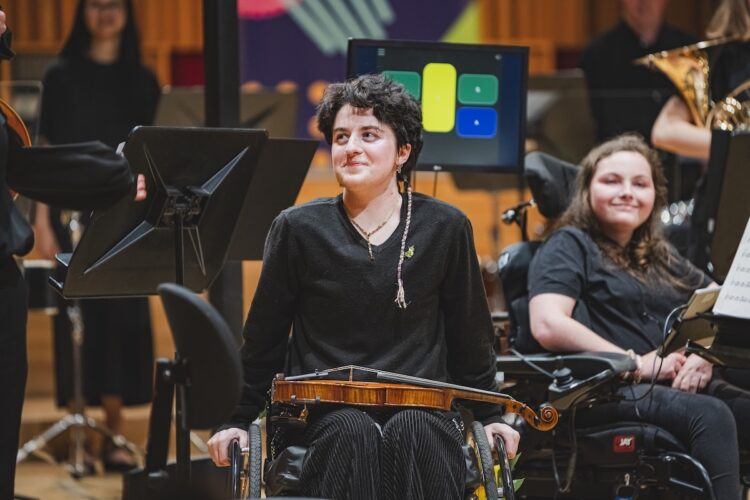
Historically, participating in group-based music activities has been prohibitively impractical for many young disabled people. As a result, this group has been hugely under-represented within the orchestral and compositional community. Open Up Music was established in 2016 with the objective of changing this, and is committed to offering greater musical opportunities for young disabled people who wish to explore their musical potential.
They operate across three key programmes. Open Orchestras helps special schools set up accessible orchestras, giving young disabled people their first experiences in the world of ensemble music. In 10 years, Open Up Music has established the UK's largest network of ensembles in special schools, with 45 ensembles running in the 2025/26 academic year.

To activate the video from YouTube, please click on the link. By activating the link, data will be transmitted to YouTube. Further information can be found in our privacy policy.
The National Open Youth Orchestra, or NOYO, is the world’s first disabled-led national youth orchestra, with 65 11 to 25-year-old musicians playing across five Regional NOYO Ensembles. These are run in partnership with major arts organisations in Birmingham, Bournemouth, Bristol, Cardiff and London, as well as a national touring ensemble. This year, the touring ensemble will perform alongside musicians from the BBC National Orchestra of Wales.
Finally, Open Up Music has also developed an accessible instrument for iPad and PC, called the Clarion. It can be played expressively with any part of the body, and even by eye movement. It’s the first-ever digital instrument assessed by the Associated Board of the Royal Schools of Music, or ABRSM, making it an industry-recognised and graded instrument.

To activate the video from YouTube, please click on the link. By activating the link, data will be transmitted to YouTube. Further information can be found in our privacy policy.
Head to the Open Up Music website to discover more, and to learn how you can support them in continuing their mission to make ensemble music more accessible for all.
Saffron Music
Music technology education for women, non-binary, trans and gender non-conforming people

This Bristol-based nonprofit and record label was established in 2015, driven by the desire to address the gender imbalance in the music technology industry. Saffron offers a range of courses, workshops and artist development opportunities to those who are under-represented in the industry, including women, non-binary and trans people.
While Saffron’s foundations are in the South West of England, they have been able to expand their positive impact via further workshops in London, and worldwide via their online Members community. Specific subjects include music production, DJing, sound engineering and radio broadcasting, and are delivered by their roster of highly-experienced mentors and tutors.

As well as their growing community of resident educators, Saffron regularly welcomes special guest hosts to share insights into their creative practice and experience of the music industry. Past guests include music producer Ikonika, sound designer Lucy Hayes, and radio presenters Millie On Air and Medis. They’ve also announced an ongoing partnership with FKA Twigs, which will see them join forces to launch an educational grant programme.

To activate the video from YouTube, please click on the link. By activating the link, data will be transmitted to YouTube. Further information can be found in our privacy policy.
Prospective students can enrol in short courses with Saffron, or subscribe to one of their Members tiers to access a whole host of other benefits, such as exclusive industry opportunities and free music tech. They’ve also recently introduced an Allies programme, which allows cis men and other supporters to access some of Saffron’s many benefits while contributing to the initiative. Saffron is actively dedicated to removing financial barriers to music tech, offering bursaries and subsidies for at least a quarter of participants on all courses and workshops.
Head to the Saffron website to learn more about the great work they’re doing around accessibility in music.
What Can You Do to Help?
If you’ve read this far, you might be wondering what you can do to help make music more accessible for all. The good news is that there are plenty of ways to help, and you can refer to the websites of the organizations discussed above for specific actions you can take as an individual.
For instance, most organizations welcome charitable donations, which help support their mission to improve accessibility in music. Additionally, educational initiatives like Hejmo and Key Changes frequently publish volunteering opportunities to their websites, which can involve supporting the delivery of workshops, classes and events.
If you represent a business within the music industry, you can show your support by offering free and discounted products and services to members of relevant organizations. For example, at zplane, we've committed to giving members of Saffron’s Soulmate tier a free license to PEEL STEMS, and all members get 40% off the entire zplane product range. Similarly, we've provided Hejmo a number of TONIC licenses for members and volunteers to use in their workshops.
Finally, no matter your background or level of involvement in the music industry, it’s important to recognize that there is still work to be done before music becomes truly accessible for all. Talking about these issues and actively advocating for a more inclusive and supportive environment will help to foster a more accessible music industry for everyone.