
“I didn’t really know how a compressor worked until 2022.” - An Interview with edetto
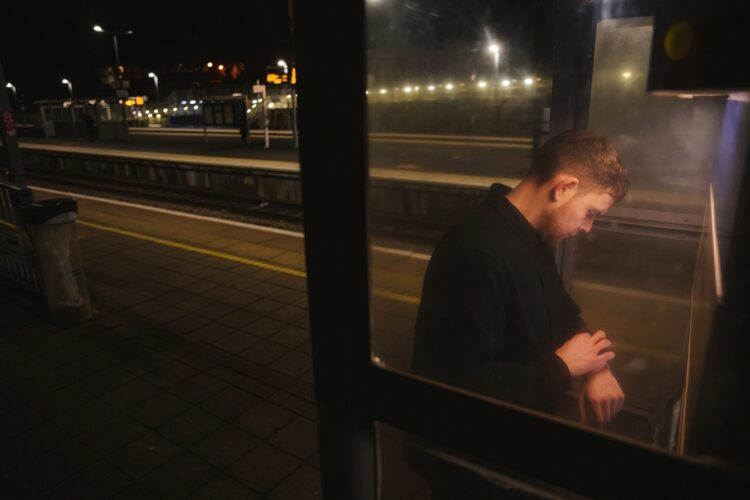
We hear from Bristol-based edetto about his take on Techno, how Ableton Live replaced his analog workflow, and why tips and tricks videos won’t save your mix.
Berlin, the home of zplane and countless other music tech brands, is considered by many to be the capital of Techno music. Over in Bristol, England, artists like edetto are infusing the traditional Techno sound with bass-focused influences from Bristol’s rich musical history.
In this artist interview, we spoke with the Bristol-born producer and engineer about how his home city helped him find his groove, how his approach to music making has evolved, and using analog hardware in the cloud.

To activate the video from YouTube, please click on the link. By activating the link, data will be transmitted to YouTube. Further information can be found in our privacy policy.
Please could you introduce yourself and what you do?
I’m Jon, I make music under the name edetto. I’d describe myself as a producer, mixer, and mastering engineer. Aside from that, I also DJ and run a record label and occasional club night called Flat 7.
In terms of your earliest involvement with music, did you start out learning instruments, or was it always electronic music for you?
I started playing the drums at school. I was always tapping along to music, hitting things and stamping my feet. I guess I was interested in rhythm, so my mum got me a drum kit and some lessons.
From there, I started a few bands with mates. We were into stuff like Nirvana and Green Day, so we played a few Rock gigs at school, but never really recorded anything. Then I took an interest in other instruments, so I tried the guitar out, then piano and keys, and really got into that.
How did being in Rock bands transition into DJing and music production?
I was enjoying being in bands, but we’d never recorded ourselves, so I decided to study music tech at college with the aim of recording our own stuff. At the same time, I was starting to go out more, and Bristol is very geared towards electronic music. When you go out in Bristol, you quickly discover Drum and Bass.
I was like “Oh s**t, let’s have a go at this!” I was going out with the same mates I’d been in bands with, we quickly pivoted from guitar amps and drum kits to belt-drive turntables and KRKs. The music totally shifted for us, and it was all systems go on electronic music.
Even though we were taught Logic Pro at college, I didn’t really do anything with it for ages. It was all DJing and nightlife for a few years, until my friend Ash, who was producing as Woz at the time, was making a lot of music. It was like “Oh, you can actually just make tracks, this isn’t so far out of reach!” It really made me wish I’d paid a bit more attention in college when I could have been learning Logic Pro inside out.
You mentioned hearing a lot of Drum and Bass in Bristol’s clubs around this time. Can you think of any specific influences, or other artists that had a big impact on you?

To activate the video from YouTube, please click on the link. By activating the link, data will be transmitted to YouTube. Further information can be found in our privacy policy.
The trajectory of my music taste is really heavily rooted in Bristol. We started going to a Drum and Bass night called Run, which was at a club called Native every Wednesday night. The residents were people like Xample, Lomax and Clipz.
"It was a huge shift from Drum and Bass and Dubstep to this kind of broken hybrid style"
There was this moment where Clipz became Redlight, and Mensah, who was making Dubstep, became NYTA. Then you had Swamp 81, Hessle Audio and Redlight’s Label, Lobster Boy, and it all just became its own scene, which I guess would’ve been known as ‘Bass Music’. People like Mak and Pasteman then started taking this sound in a more traditional 4/4 Techno direction.
It was a huge shift from Drum and Bass and Dubstep to this kind of broken hybrid style, and I forgot those genres even existed. It kind of felt like a big moment for people like Woz and myself, we were like, “We’re just doing this now. This is us.”
Are we right in thinking you had some other aliases before the edetto project?

To activate the video from YouTube, please click on the link. By activating the link, data will be transmitted to YouTube. Further information can be found in our privacy policy.
I had an alias where I was just DJing and not really producing anything, then when I got more into production, I had a few releases as Bromley. It was actually a three-person project, and our first track was called Over You, which came out on Eton Messy. It was kind of a broken beat thing with a more commercial vocal over the top.
Of the three of us, I was always pulling in a darker direction, and ended up making more Techno-adjacent stuff, which is when the shift to edetto happened. I was making this kind of stuff as Bromley, and no one wanted to hear it, so in 2018, I was like, “F**k this, I’m starting again. Let’s go.” And now I’m here!
The influences you’ve described there would go some way to explaining why some of your productions as edetto, still veer away from the traditional 4/4 Techno kick pattern. Is that what you’d characterize as ‘Bristolian Techno’?

To activate the video from YouTube, please click on the link. By activating the link, data will be transmitted to YouTube. Further information can be found in our privacy policy.
Yep, maybe I’ve coined that term! My journey through the music I’ve just described is what I would consider to be ‘Bristolian Techno’. I definitely take some influence from a more Berlin sound - FENIM0RE, Bailey Ibbs, Alarico, Chlär, and JKS are some big hitters that come to mind.
“I sometimes fall into the trap of trying to emulate certain artists, but it never comes out how I want.”
Whilst they’ve got a European sound, you can hear a UK attitude in there too. When you see them DJ, it’s almost as if they’re mixing Techno like a Drum and Bass DJ. It’s all about energy, chops and spinbacks. My style is a melting pot of those traditional Techno influences with the more broken, bass-influenced UK stuff.
I sometimes fall into the trap of trying to emulate certain artists, but it never comes out how I want. Instead, these days, I just sit down and say, “I want to make the weirdest thing I can.” Find a decent kick, some interesting sub bass (don’t be scared to push it) - then go west from there!
So what kind of setup are you working with now, and how has it evolved through your career?
I’ve got rid of a lot of stuff now, and basically none of my hardware instruments are plugged in. For years, I wasn’t a very talented producer - I was just using samples and mashing presets, chucking stuff at the wall and seeing what sticks. I didn’t really know how a compressor worked until 2022.
I got my first synth, a Korg Monologue, after Woz recommended it. It’s really basic, but you can learn a lot from it. All of a sudden, I was like “F**k, I can make some wild sounds with this type of kit.” So I went fully down the hardware avenue and ended up in a completely analog workflow, making everything from scratch.
“So now, I can do real analog masters from home. The tech is crazy.”
Then I made the switch from Logic Pro to Ableton Live, and I realized that I was getting to the destination so much quicker in the box. I’d learnt all the sound design and workflow skills from having physical gear, but now I could apply that within the DAW. Now, I try to make everything in the box but follow an analog workflow - synthesising from scratch as much as possible. I’m just using little MIDI controllers, mapping everything to parameters in Ableton.
I do think there’s still a difference between digital and analog processing, so I’ve also been branching into Access Analog. It’s basically analog in the cloud. They’ve got a load of physical hardware in a warehouse in California. You send your audio from your DAW to their kit and back, and you can control all the parameters remotely. So now, I can do real analog masters from home. The tech is crazy.
Aside from the unique tones and textures in your music, the intricate rhythms are particularly compelling. Do you think that comes from sound selection, programming, or mixing?

To activate the video from YouTube, please click on the link. By activating the link, data will be transmitted to YouTube. Further information can be found in our privacy policy.
I think you’ve got it in order of importance. Sound selection is the most important thing. I’ve done a lot of turd-polishing in my time, trying to mix my way out of bad production choices, which really isn’t possible.
“If you get the right elements and the right groove, the track doesn’t need to do much at all.”
In terms of the groove, that comes more from the programming. A good record needs good sound selection, but if those sounds are badly programmed, it’ll still be a bad record. A lot of my tracks are just drums and one-shot sounds. I’ll use MIDI to introduce rhythmic call and response patterns with synths, drums, and stabs. The benefit of doing this with MIDI is that I can swap sounds out at any point if things aren’t working together. Even doing mixes for other people, I’ll often swap the kick out, which can fix loads of issues.
If you get the right elements and the right groove, the track doesn’t need to do much at all. The whole thing falls together, and I can just sit in that pocket of groove for ages. I never got on with Logic Pro’s swing functionality, but Ableton Live Groove Pools have blown my mind. Occasionally, I’ll fully produce and arrange a track, decide it needs some groove, highlight the entire thing, and apply swing to everything.
As well as your own productions, you’ve also been mixing and mastering other people’s music. How did that come about?
When I started the edetto project in 2018, I realised I wasn’t a good mixer. So I drafted in Rob Lindsay to mix my first EP. It sounded unbelievable, so I got him to mix the second EP but asked if I could sit in on the mix session. By EP three or four, I was like, “I have to know how to do this. Can you teach me?”
He kindly agreed, and we spent a lot of time together working on my records, going through the entire process. Eventually, I got to the point where I could get my records to where I wanted them. People started noticing my mixes, I’d have people ask me at raves or on Instagram, “How’d you get your track to sound like that?”
Then I started doing little favours for people, giving mix feedback or tweaking things here and there. Over time, I realised I had to stop doing favours, and I needed to start charging for my services. I’ve had some really happy clients so far!
How does your process change when you mix for other people versus mixing your own records?

The technical mixing process is always the same. Generally, there’s less work to do on my own mixes because I’ve produced the record with the mix in mind, and I know what I’ve already done. Mixing other people’s work requires me to do more checks and due diligence. I check the frequency response on every element, check for clicks, pops, artifacts, phase issues, etc. Now I charge for my work, it’s important to me that I deliver my clients the best quality mix I can.
Are there any particular tools, techniques, and processes that are core to your production or mixing workflow?
Referencing is one of the most important things for me as a mixing engineer. I’ve got playlists of reference tracks for different genres, so when I get to the studio in the morning, I’ll look at what I’m working on and decide what I need to listen to to get my ears in tune. I’ll use the rough mix, plus a track in the same style or genre, or maybe even a track the client has asked for as a reference point, and I’m always checking my mix against those references.
“It’s a bit boring, but get your room, monitoring, and references right, and you can get so far with levelling.”
I think people also forget how important your room is. Forget compression and saturation; if your room sounds s**t, you won’t be able to mix. I’ve got a decent setup in a fully treated room, but I’d still love to upgrade my monitoring in the future. It’s a bit boring, but get your room, monitoring, and references right, and you can get so far with levelling.
Pitch shifting is a massive part of my sampling workflow, and I use Ableton Live’s built-in pitch-shifting for that. One of my favourite things to do is pull in a texture sample or loop and pitch it down by two octaves. The sound degrades the lower you go, and you can create really interesting sub-bass sounds by getting extreme with the settings.

To activate the video from YouTube, please click on the link. By activating the link, data will be transmitted to YouTube. Further information can be found in our privacy policy.
I’ve also used PEEL STEMS recently in a few situations where I haven’t had access to the original stem files. In a mastering context, if the vocal needs to come up by 2dB, or the kick is a few dB too loud, I don’t want to fix that with traditional mastering, so I would need to send the premaster back with some notes.
With PEEL STEMS, I can make those changes myself, either to show the artist what I’d like them to address in the mix, or even just to work on the final version. It does a really good job; it doesn’t seem as wonky as some of the AI-based stem separation tools.
What’re you working on at the minute?
I’ve just mixed a record for an artist called Badliana, called Bright Lights. It’s one of my favourite mixes I’ve done in a long time. The source material was amazing, the song itself was amazing, and it just came together really well. I’m also mixing and mastering everything we put out on my record label, Flat 7.
Take a look at the link above to learn how edetto approaches mixing a vocal record, with an emphasis on control, staging and separation.
In terms of my own productions, I’ve got a three-track EP coming out on the label in the next few months. I’d like to do at least one more EP this year, as I normally put out four or five EPs a year, but I’m a bit tight for time these days.
Any advice for anyone wanting to improve their mixes?
I found having a mentor really helpful, and finding a process you can replicate across every mix. You won’t use the exact same plugins and settings on every mix, but the steps and thought process should always be the same. Getting lost in a mix is one of the worst feelings, and having a process to follow solves that problem.
“There are too many quick fixes, tricks and tips online, so get off YouTube Shorts.”
Secondly, there are too many quick fixes, tips and tricks online, so get off YouTube Shorts. People love to make things sound overly complicated online, but they're doing it for views. Mixing is actually incredibly simple if you know what you’re doing. If you are on YouTube, find one person or one channel and commit to their end-to-end process. Everyone mixes differently, and you can’t follow everyone's process, so find one that works for you and stick to it.
At the same time, there’s no shame in deciding that you’re an amazing producer, but not a good mixer, or you don’t enjoy it. It’s okay to dedicate your time to making the record, then handing it off to a mix engineer to get it to where you want it.
And if someone would prefer you to take care of their mixes, how can they get hold of you?
If people need a hand with their sonics, they can message me on Instagram, and I’d be happy to see how I can help!
Thanks to Jon for sharing his time and knowledge in this insightful interview. You can check out his productions on Spotify, follow him on Instagram, and keep up with his record label here.