
Camouflage's Heiko Maile on Maintaining a Creative Career for More than 40 Years - An Interview with Heiko Maile
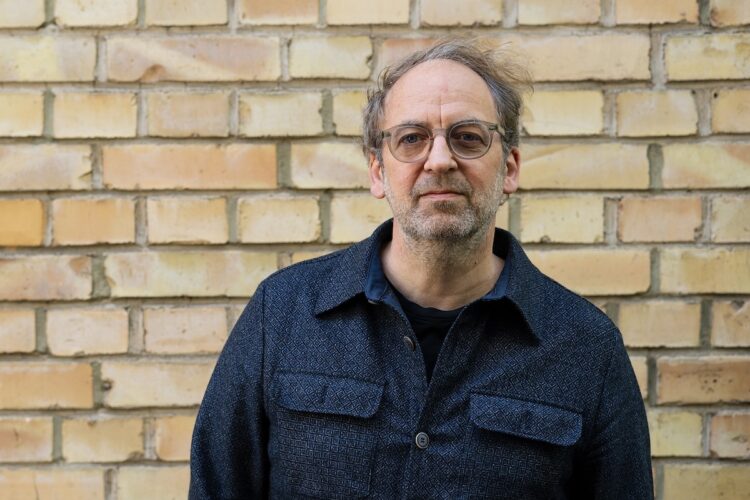
Reiner Pfisterer
It’s sometimes hard to let go of a good idea you’re musically or stylistically excited about.
With a career spanning over four decades, Heiko Maile has left a lasting mark on electronic music – first as a founding member of the pioneering synthpop band Camouflage, and later as a celebrated composer for film and television. In this exclusive interview, Heiko reflects on his journey, which has seen him produce chart-topping singles as well as award-winning film scores.
We explore how his musical instincts have evolved, how he bridges the worlds of band production and cinematic scoring, and how tools like ELASTIQUE PITCH have become essential to his creative process. Whether you're a longtime fan of Camouflage or an aspiring composer, this candid conversation offers deep insight into sustaining inspiration, navigating artistic transitions, and a diverse catalogue of music that resonates.

Reiner Pfisterer
Please could you introduce yourself and what you do?
Hello, my name is Heiko Maile. I’m a film composer and music producer – most people probably know me as a member of the band Camouflage, with whom I’ve been making electronic music and touring since 1983.
Coming from a successful band, how did you get into composing for TV and film?
There was a longer phase in between, during which I mainly wrote and produced music for commercials and corporate films, alongside working with the band. Some Camouflage songs have a certain cinematic quality – at least that’s what fans often told us. One reason could be that from the very beginning, we always included instrumental tracks on our albums. Even Pompeji, the B-side of our first single, The Great Commandment, had great potential for visual storytelling.

To activate the video from YouTube, please click on the link. By activating the link, data will be transmitted to YouTube. Further information can be found in our privacy policy.
For many years, I applied for feature film projects, and in 2008, I finally got the chance to write the music for the film The Wave by Dennis Gansel. Since then, I’ve mainly worked in this field.
Please can you explain how you approach music production and composition as a member of Camouflage versus for film and TV?
The biggest difference is that music for film must primarily serve the film. That sounds simple, but it’s not – it’s sometimes hard to let go of a good idea you’re musically or stylistically excited about, especially when it turns out that the scene needs a completely different tone.
Often, you only get a full overview of the film shortly before it’s finished. At that point, music might get cut – regardless of how much time you invested in it. Only when the score is complete and the dialogue and sound design are in place can you truly feel whether a film has too much music or not.

To activate the video from YouTube, please click on the link. By activating the link, data will be transmitted to YouTube. Further information can be found in our privacy policy.
As a solo artist or band member, you mainly listen to yourself. The longer I do this, the more convinced I am that as any kind of artist, you should only release what you fully stand behind. That takes a certain radicalness – which is only partly possible in film, because you’re part of a larger team.
I enjoy working in both worlds. My pitfall might be that I come from the days of classic recording studios – with a focus on tracking, gain staging, mixing, and so on. That makes my workflow quite similar across both film and band projects. In a way, I record an album for every film.
Technically, the results are often very refined, but this attention to detail takes a lot of time – many of my film music colleagues work faster because they skip that level of depth.
It would be fair to assume that Kraftwerk, Depeche Mode, and The Human League all influenced the early Camouflage sound in some way. Are there any more contemporary artists or projects that you find particularly inspiring?

To activate the video from YouTube, please click on the link. By activating the link, data will be transmitted to YouTube. Further information can be found in our privacy policy.
Absolutely! Our passion for music has never stopped. The '90s brought a lot of variety in electronic music – Massive Attack, Underworld, 808 State, just to name a few. But we also find current artists like Weval, Makeup and Vanity Set, or Trentemøller very exciting. There are always so many great new things to discover.
Sometimes I smile when a new artist is hyped as “the next big thing,” but their sound strongly reminds me of early Ultravox or Patrick Cowley. Or take Trentemøller – in my opinion, each of his albums gets closer to The Cure. Despite all the ’80s influences, these artists still make something truly their own.
Our band has always been stylistically diverse – Marcus, Oliver, and I have very different musical tastes. But when we work together, there’s always a kind of stylistic intersection, a “Camouflage palette” shaped by our shared roots.
You’ve previously been nominated for and won awards for your work on We Are the Night and Winnetou - The Myth Lives. When you’re in the depths of a project, do you get a sense that you’re working on something special that will be well received?

To activate the video from YouTube, please click on the link. By activating the link, data will be transmitted to YouTube. Further information can be found in our privacy policy.
Whether as a film composer or as part of Camouflage, I always pursue the same goal: That emotional moment at the end when everyone listens to the finished work and you collectively feel that the project is coherent and complete, and that we gave it our best.
To what extent a project resonates with the audience depends on many uncontrollable factors. When a song becomes especially successful or even turns into a classic, it develops a life of its own. We’ve experienced that with The Great Commandment, and Love Is a Shield – regardless of what else we do or release as a band.

To activate the video from YouTube, please click on the link. By activating the link, data will be transmitted to YouTube. Further information can be found in our privacy policy.
With music for film, the perception is very closely tied to the film itself. If the storytelling and direction are strong, the music is usually well received too – and vice versa. A movie’s success is often decided on its opening weekend, regardless of how long and hard everyone worked on it. That can be a sobering end for many people whose contributions deserved more recognition.
The two projects you mentioned hold a special place for me: We Are the Night is, in my opinion, one of the best German films of the past 20 years. And Winnetou sticks with me not only because of the amount of music, but also due to the great collaboration with other creatives. This included many musicians, the German Film Orchestra Babelsberg, and personal encounters with Martin Böttcher who composed the music for the original Winnetou films.
Winning the German TV Award for Winnetou in 2016 was wonderful – but I would gladly have traded it for more media coverage and positive resonance for those three films.
You’ve enjoyed a lengthy career spanning over 40 years. How have you had to adapt your professional practice during that time?

A lot has changed over the years – my environment, my workflow, my equipment. I started out with a small amount of mostly semi-professional gear. Our first demos were made largely without MIDI, and well before the use of computers or DAWs.
As our success grew, so did the quality of our equipment and studios. Working with Dan Lacksman (Telex) in Brussels, in particular, got me deeply into the world of production and recording. Thanks to generous label budgets, we were able to build our first large studio in Hamburg.

To activate the video from YouTube, please click on the link. By activating the link, data will be transmitted to YouTube. Further information can be found in our privacy policy.
In the ’90s, things quietened down for us, budgets shrank, and work shifted to smaller studios – and later into my home studio. Around 2000, I sold my large DDA mixing console and a lot of outboard gear to switch to a Pro Tools HD system. I connected my analog synths directly to the interface, which shocked many of my colleagues at the time. Today, even that feels like the Stone Age.
Although I still use many of my favorite devices, my film scores today are dominated by DAWs, virtual instruments, sample libraries, and recordings with soloists or orchestras. The goal is to keep everything flexible and adjustable until the very end.
Even so, I try to organize both my film and band work, so that in the end there’s a clean, compact project with final audio files left over – no plugins, no clutter. Whether that’s the old-school archivist in me or the forward-thinking film composer prepared for the call, “Do you still have the tracks from back then?” – who knows.
How do you stay inspired and keep your compositions fresh across different genres and projects?
Larger film projects often mean spending a lot of time on organizational tasks – communicating with the director, legal matters, cue sheets, and documentation. That leads to long stretches where I don’t make any music at all – but that makes me even more excited to dive into the creative part again.
Usually, I start a new project by developing a unique sound palette – that helps me immerse myself in the film’s world. After the so-called picture lock, I create a detailed cue sheet listing every music moment in the film. It’s based on the director’s vision, but it also evolves with my own impressions. It becomes something like a working bible.

Sometimes, while working on an emotional scene, I’ll stumble upon a sound that fits perfectly in a completely different moment – having that list to refer to is incredibly helpful. The best ideas often come unexpectedly. For me, film music depends heavily on inspiration, but the film’s structure already provides a framework – like the pillars of a house – and the rest of the walls usually fall into place.
I still listen to a lot of new music, buy vinyl, and discover new bands. If I get stuck, I’ll loop a scene and improvise over it or listen to different tracks – that often leads to magical moments. Film music can be anything – from a full orchestra to a chopped-up rhythmic track made entirely of sound effects.
With Camouflage, it’s different. In the early days, we approached songwriting with more spontaneity, but as success grew, so did the expectations – from others and from ourselves. In the late ’90s, things quietened down, and we had to develop new avenues – in hindsight, that was a stroke of luck. It made us more independent and free artistically.
How do zplane plugins fit into your creative process, and what role do they play in your music production?

To activate the video from YouTube, please click on the link. By activating the link, data will be transmitted to YouTube. Further information can be found in our privacy policy.
I discovered zplane in 2017 when I bought ELASTIQUE PITCH and élastiqueAAX – both have become essential parts of my toolkit. élastiqueAAX was a game changer in film music because it allowed me to flexibly adapt high-quality audio recordings to different lengths – whether short moments or entire film sequences.
I use ELASTIQUE PITCH a lot while composing. When I’ve already recorded audio but want to transpose the arrangement to a different key, this tool works wonderfully. I often blend in a higher or lower octave using the Dry/Wet control – it gives the sound more depth. The Timbre setting also creates interesting textures, especially when mixed with the original signal.
Can you think of any of your past projects that feature ELASTIQUE PITCH or élastiqueAAX more heavily?

To activate the video from YouTube, please click on the link. By activating the link, data will be transmitted to YouTube. Further information can be found in our privacy policy.
One project where ELASTIQUE PITCH stands out in my memory is the track Luvua River for the film Fly Rocket Fly. There was a mysterious scene that needed music with a very special texture. My colleague, Torsten Kamps, recorded saxophone solos, which I routed through several channels using ELASTIQUE PITCH – each with different tunings and timbres, combined with various effects. The result was a fascinating, multilayered saxophone “poly-solo” that gave the scene a very distinct atmosphere – it also reminds me of Jon Hassell, one of my musical heroes.
What else are you working on at the moment?

To activate the video from YouTube, please click on the link. By activating the link, data will be transmitted to YouTube. Further information can be found in our privacy policy.
I composed the soundtrack for the film Der Tiger, which premiered in cinemas this fall and is now on Amazon Prime. It’s directed by Dennis Gansel, with whom I’ve had a long-standing friendship and working relationship. It’s an anti-war film, and I’m really curious to see how audiences react. I’m also working on new Camouflage songs, though it’s still completely open what we’ll do with them or when.
Do you have any advice for artists or producers who are eager to step into composing for TV and film?
Since I struggled for a long time to gain a foothold in this field, I know how frustrating it can be. But often, it comes down to the right timing, so don’t give up! Those who grow professionally alongside others often stay together as a team. That’s why it makes a lot of sense to connect with filmmakers early in their careers. I also recommend building a variety of pillars in your career.
If you work in different areas – live music, band, film, advertising, teaching – you can weather dry spells better. And you become more independent: Then you can afford to turn down a project – something we freelancers often find hard to do.
Thanks to Heiko for taking the time to speak with us. If you want to keep up with Heiko, you can follow him on his own Instagram account as well as Camouflage’s.