“It's really important to figure out what you actually enjoy, and follow that path.” - An Interview with Matt Tinkler
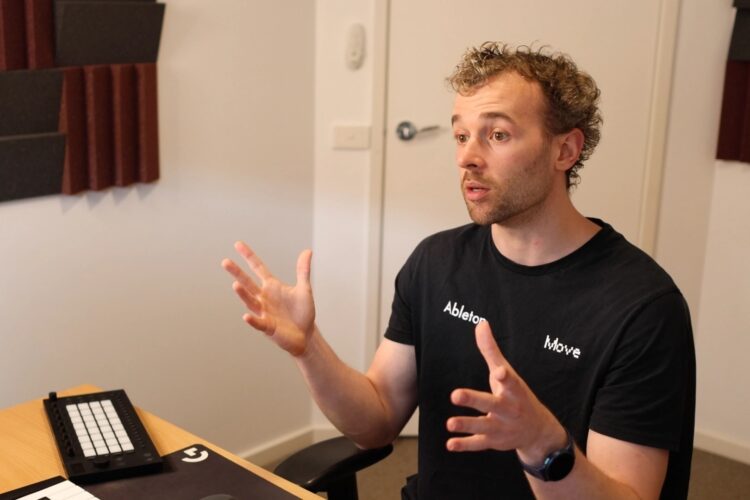
We hear from Matt Tinkler about his love of Metal Music, becoming an Ableton Certified Trainer, creating videos for zplane and more.
If you’ve spent any time watching Ableton Live tutorials on YouTube, you’ve almost certainly come across the latest person we've interviewed for the zplane blog. Matt Tinkler is an Australian music producer and educator, known for his transparent and upbeat music production content and encyclopedic knowledge of Ableton Live.
In this interview, Matt shares how he found his passion for teaching, becoming one of fewer than 400 Ableton Certified Trainers worldwide, and how making a beat a week helped him discover his unique sonic aesthetic.

Please could you introduce yourself and what you do?
I’m Matt Tinkler, and first and foremost, I’m an electronic music educator. I'm also an Ableton Certified Trainer, a content creator, and music maker. Basically, my life mission is to help electronic music makers find their sound by mastering their tools, techniques, and creative process.
What came first for you? Were you a musical person who got into education, or an educator who got into music?
I was absolutely a musician who got into education. I learned piano from the age of 5, then got very into Metal in my teenage years. I wanted to play in Heavy Metal bands, but got very confused about how I could play piano in that style. Through that, I discovered the world of synthesizers and in turn, Electronic Music.
"I realised that I loved sharing the knowledge I was developing, and decided to become a teacher."
I learned that people could use computers to make Electronic Music on their own, so I decided to do the same. I got really into it, studying music production and composition at university. About a year into my degree, I realised that I loved sharing the knowledge I was developing, and decided to become a teacher.
And what were your first experiences as a music production educator?
I had a few one-on-one students to begin with, but knew I needed a master's degree to teach at universities. About a year into my master's, I ended up lecturing part-time at the Australian Institute of Music in Melbourne, which is where I studied. I also taught at a few other institutes, wrote an entire degree course with a bunch of new units, and suddenly, teaching became a massive part of my life.
Metal to Electronic Music feels like quite a common jump for many people, with prominent Electronic artists like Skrillex and Pendulum famously coming from a Metal background. Can you remember any key influences or inspirations that helped to bridge the gap between Metal and Electronic Music for you?

To activate the video from YouTube, please click on the link. By activating the link, data will be transmitted to YouTube. Further information can be found in our privacy policy.
Oh, 100%. Acts like Asking Alexandria, The Amity Affliction, The World Alive and Bless The Fall were all big influences during that time. There were bands like Bring Me the Horizon too, who were less Electronic back then but definitely had some Electronic influence. Then some even less Electronic stuff, like Disturbed and Coheed and Cambria, who are probably my favourite band of all time.
“It’s fun to bring that teenage influence into the music I’m writing now.”
There’s definitely some overlap between the two genres. I’ve noticed a lot of crossovers where Metal artists are collaborating with Electronic acts. It’s starting to show a lot in my own music too - it’s fun to bring that teenage influence into the music I’m writing now.
You mentioned you’re an Ableton Certified Trainer. Have you always been an Ableton Live user, or have you done the tour of DAWs?
I’ve always used Ableton Live, with the slight caveat that I once downloaded a trial of FL Studio but couldn’t figure it out. A high school friend actually got me into Ableton after he got an original AKAI APC40. We had this little duo where I would play a synth and he’d trigger loops.

To activate the video from YouTube, please click on the link. By activating the link, data will be transmitted to YouTube. Further information can be found in our privacy policy.
This was around the time Madeon released his Pop Culture video, where he did a live mashup of loads of music on a Novation Launchpad. I was like “Oh yeah, that’s awesome”, so I saved up and bought a Launchpad and a computer that could actually run Ableton Live 8, and I never looked back.
Are there any particular Ableton Live features or workflows that are core to your production process?
I use a lot of stock Ableton Live devices in my own music, particularly synths like Wavetable and plenty of the built-in effects like Reverb and Delay. I’ll make use of specific third-party plugins if I want a particular sound, but now I’m used to the speed and workflow efficiency of using stock devices, so I tend to gravitate towards those.
From my understanding, Ableton Live also uses zplane technology for its Complex and Complex Pro warp modes? I use those all the time for repitching vocals, and anything else that needs to be pitch-shifted transparently. I was aware of your ELASTIQUE algorithm before I knew about the plugins, so it’s cool to be working together!
What can you share with us about the process of getting signed off as an Ableton Certified Trainer?

To activate the video from YouTube, please click on the link. By activating the link, data will be transmitted to YouTube. Further information can be found in our privacy policy.
I can't share too much without breaching my NDA! The training covers all Ableton products, so Push, Move and Note, as well as Live. It’s also about your ability to teach, not just your technical knowledge of the tools they make.
“I can’t share too much about the interview itself, other than that it was the most stressful Zoom call of my life.”
In terms of the process itself, you submit an application and then, if successful, get invited to an interview. I can’t say too much about the interview itself, other than that it was the most stressful Zoom call of my life. If you pass that stage, you move on to the final stage, which is a multi-day event where they actually test your teaching ability in a real-life scenario. They only take on new cohorts of certified trainers a few times a year, and there are less than 400 Ableton Certified Trainers in the world. It’s a privilege to be one of them!
As well as tutoring and teaching in universities, you also educate music producers via online content. What was the motivation behind starting your own YouTube channel?

I made my first few YouTube videos when I finished university and tried to make a bit of a thing of it. Partly because that’s how I initially started learning and I wanted to pass my knowledge on in the same way, but also because I saw it as a pathway to becoming a better educator. My early YouTube videos were a big part of my Ableton Certification application, and subsequently helped me to get certified.
“My YouTube channel gave me an outlet to share what I was learning and experimenting with outside of my day job.”
Unlike my university teaching roles, my channel allowed me to teach what I wanted, when I wanted. After teaching the same units across 12-week blocks for over two years, you do start to get a bit bored of the curriculum in some aspects. My YouTube channel gave me an outlet to share what I was learning and experimenting with outside of my day job.
We’re very pleased to say that in addition to creating music production content for your own channel, you’ve also been creating videos for zplane for almost a year. How has making content for a software developer differed from making your own content?

To activate the video from YouTube, please click on the link. By activating the link, data will be transmitted to YouTube. Further information can be found in our privacy policy.
It’s definitely different in some ways. In terms of coming up with ideas, there’s less to do when you’re creating videos for other people, and you don’t need to consider your posting schedule or analytics or anything like that. You just get the brief and deliver the video.
On the other hand, it’s more curated and structured. For my own content, I’ll essentially draft a script and create some audio examples, then record in one take. With videos for zplane, the script is written word-for-word, then I’ll record the voice-over and the video separately before editing them together. It’s more like piecing together a puzzle.
I’ve found that my teaching ethos is quite well aligned with collaborating on educational and insightful content. It’s very much about diving into the technical parts of a tool, and demonstrating how it can be applied in a creative way.
Are you working on any other exciting projects that you can share with us?

I’ve just gone live with one of my biggest dreams, which is to create the go-to destination for learning Electronic Music production. It’s a platform called Aspect Music Academy - a community platform where music producers come together to learn and improve through regular masterclasses, track feedback, community feedback and structured courses.
“The idea is that someone from any background and any style of Electronic Music can join and reach their full music production potential.”
It’s essentially an extension of the mentorship program I’ve been running for the past six months. The idea is that someone from any background and any style of Electronic Music can join and reach their full music production potential.
Congratulations on the launch! You’re clearly a busy man, do you have much time to work on your own productions these days?

To activate the video from YouTube, please click on the link. By activating the link, data will be transmitted to YouTube. Further information can be found in our privacy policy.
Yes! I do actually. In 2024, I challenged myself to write an entire track every week for the entire year. Prior to that, I didn’t have much free time to work on my own projects alongside university teaching. Making music regularly really helped me to find a musical style that worked for me, which is something I’d struggled with until then. Fast forward to now, and I’m doing weekly beats again, so I’ve written loads of tracks already this year, which is cool!
I also started a solo project last year, with the alias Chronitect. I’ve spent the last couple of years building up a catalog of tracks, and I’m trying to find the best way to get them out into the world. I released three tracks last year under the Chronitect project, and am aiming to do a lot more this year.
How do you manage your time between work, content, and making a beat every week?

To be honest, I’m great with deadlines but poor with time management. I’ve moved around over the last two years or so, and have only recently resettled in Melbourne. Some people might have noticed that I’ve basically got a different background in every video I publish.
In terms of managing my creative time, I don’t really believe in separating each part of the creative process. Of course, there are times when I know I need to work on the sound design, or the arrangement, or the mix, but they aren’t necessarily different sessions. For me, ideation is part of sound design, which is part of mixing, and so on.
Do you have any advice for someone looking to build a music-adjacent career, where they maybe aren’t a recording or performing musician but are working in the field of music production in some capacity?
My main piece of advice is that the music industry is incredibly large and is intertwined with so many other industries. It's really important to figure out exactly what part of music making, writing, production, or whatever it is that you actually really enjoy, and you follow that path.
Thanks so much to Matt for taking the time to speak with us, and for continuing to create informative and engaging content for zplane. You can keep up with Matt on his YouTube channel, Instagram or TikTok pages. If you want to take your music production to the next level, head to the Aspect Music Academy website to join now.